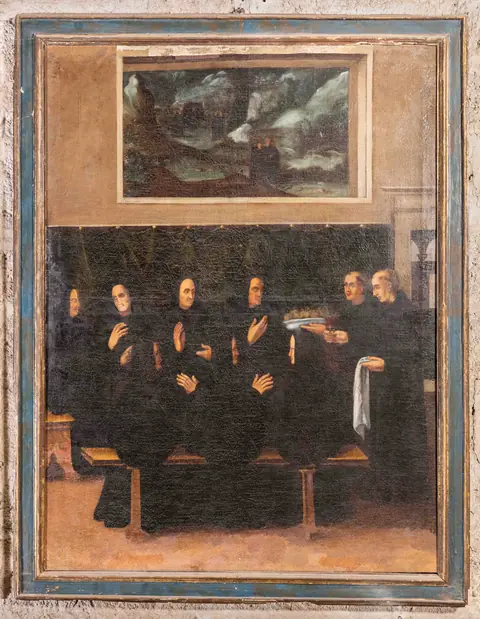
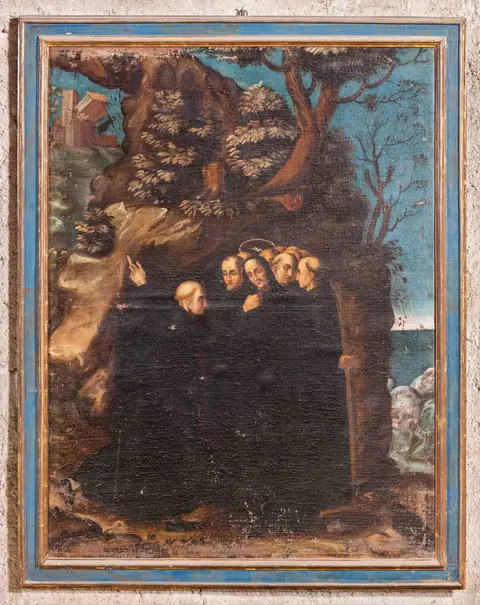
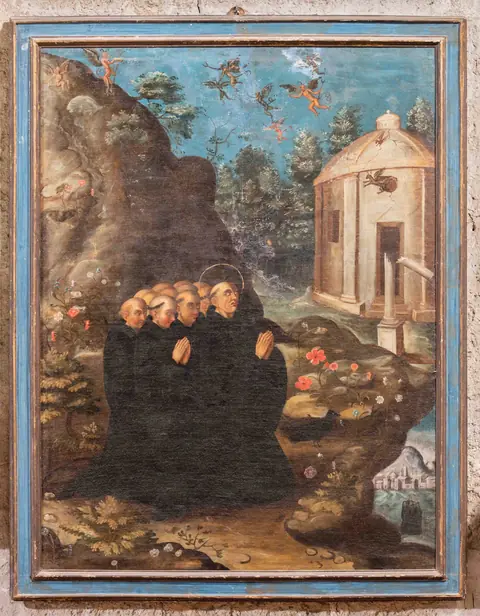
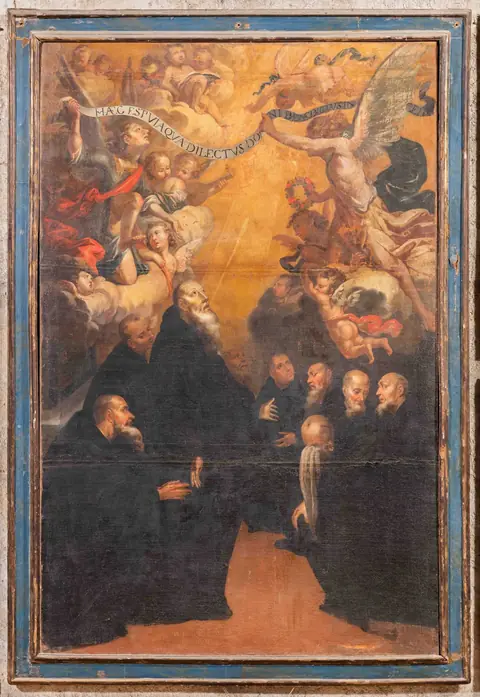
Engravings by Aliprando Caprioli, after the Dialogues of Saint Gregory the Great. Unknown artists.
Title page of Aliprando Caprioli’s book of engravingsA demon breaks the little bellFlorentius’s envyA fictitious fire in the kitchenThe death of Saint BenedictThe deception of King TotilaThe demons flee from MontecassinoSome monks try to poison Saint BenedictEngraving by Aliprando Caprioli after drawings by Bernardino Passeri
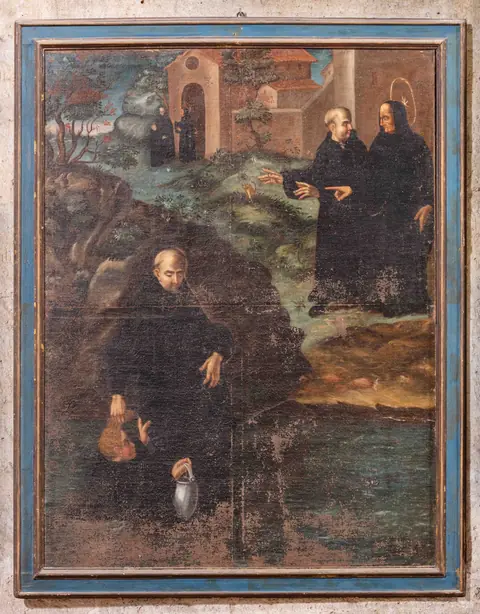
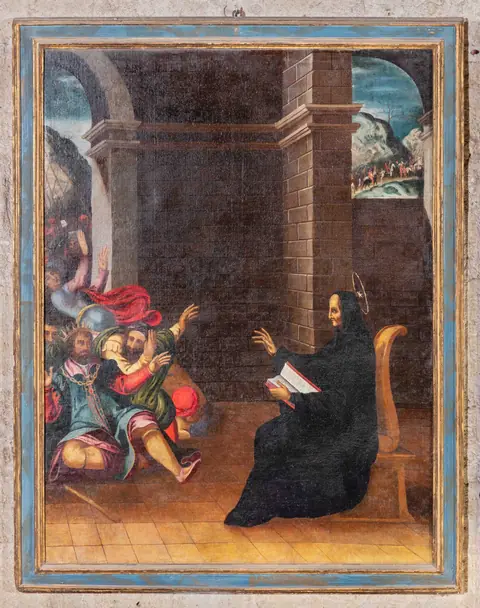
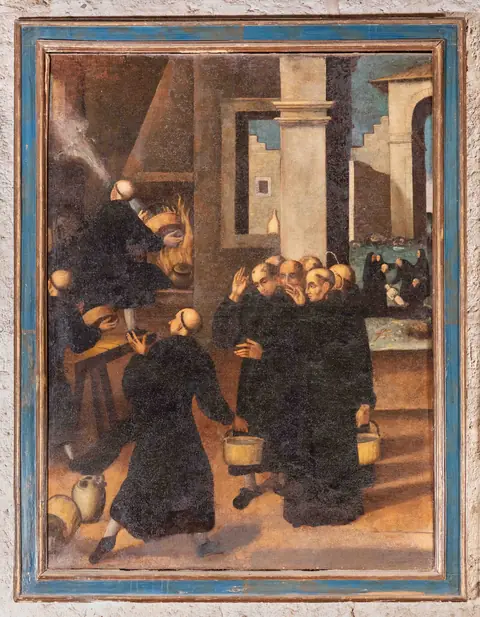
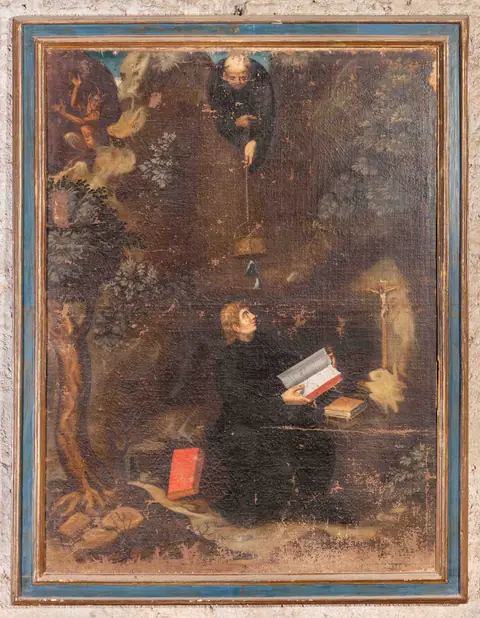
Take a moment to contemplate this collection of eight paintings, which depict some of the most remarkable episodes in the life of Saint Benedict of Nursia.
Commissioned by Abbot Bonaventura Llupiá, the works were created to decorate the monastery’s new chapter room —where the monks gathered each day to discuss and decide the community’s most important matters.
Saint Benedict is the most frequently depicted figure in the entire church. You will find more than twenty-three scenes from his life spread across its various altarpieces.
This is no coincidence. For almost a thousand years, this monastery was home to a community of Benedictine monks who lived according to his Rule and followed his example.
The scenes before you are based on the account written by Pope Gregory the Great just forty-six years after Saint Benedict’s death, drawing on conversations with people who had known him personally. It is the earliest surviving account of his life and, over the centuries, it has become his official biography.
We do not know for certain who painted these paintings. What we do know is that most of them reproduce scenes from the fifty engravings that Aliprando Caprioli made in 1579 from drawings by Bernardino Passeri, published under the title Life and Miracles of Saint Benedict.
Within these paintings, you will discover miracles, temptations, dramatic rescues and other episodes that have inspired generations of monks.
If you would like to uncover the story behind each painting, simply enter its number into the audio guide… and let yourself be carried into the story.